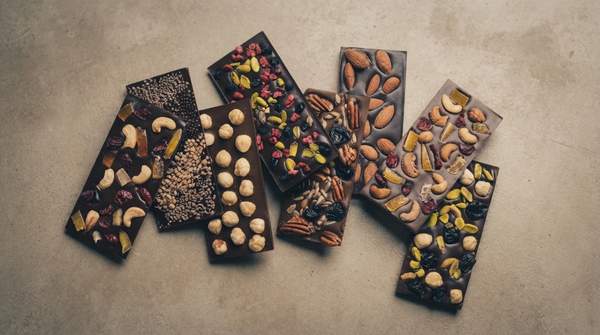
Artisanal chocolate quality is not a single virtue but a chorus: the character of the cacao bean, the discipline of the maker's process, and the purity of the final recipe. Multiple chocolate makers and industry writers converge on this framework, and it means a bar's label is readable evidence—its origin, variety, cocoa percentage, and ingredient list each point toward what you will taste and feel. A high percentage alone guarantees nothing, as one purveyor cautions; what matters is how each factor works on the next.
The Foundation of Flavor: Cacao Bean Characteristics
Every great bar begins at the tree. The chocolate maker Valrhona, drawing on a formulation that quality is "an amalgamation of four factors: origin, variety, environment and the mastery of the hands that make it," identifies three primary families of cocoa trees. Forastero tends toward bitterness and astringency; Criollo is smoother, carrying berry, nut, and honey flavors; Trinitario is a hybrid combining Forastero's robustness with Criollo's aromatic qualities. Knowing a bar's variety therefore gives you a first, rough prediction of its taste before you break a single square.
Origin works like terroir in wine, a comparison the chocolate maker Original Beans makes explicitly. South American cacao, where the plant originated, often offers greater complexity of flavor, while African cacao—dominated by robust, high-yield varieties bred for industrial scale—tends toward milder flavors, though exceptional beans with unique profiles exist there too. Writing for Fauchon Paris, Jules Darnal–Johnson notes that the International Cocoa Organization treats bean origin as a determining criterion in building aromatic profiles. Environment matters at the microscopic level as well: Valrhona observes that sunshine affects the beans' polyphenols and rainfall contributes to fermentation, so the same variety grown in different conditions will not taste identical.
Crafting Complexity: The Art of Chocolate Processing
A fine bean, however, is only potential. The Fauchon guide is emphatic that even a high-quality bean requires perfectly mastered processing to reveal its character, and its sequence of steps is worth learning because each one maps to a specific sensory outcome. Fermentation develops the first aromatic precursors of cocoa—the raw materials from which chocolate flavor is later built. Drying stabilizes the beans after harvest. Valrhona frames this stage starkly: the times of harvest, fermentation, and drying are "either times of aroma production or loss."
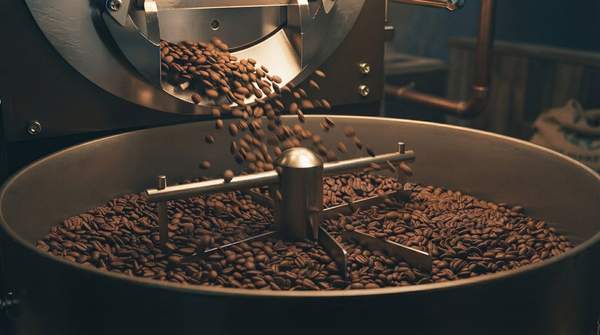
Roasting then reveals the aromas and provides characteristic toasted notes, while grinding transforms the beans into a fine cocoa paste. Conching—the prolonged kneading and aerating of that paste—refines the texture and harmonizes the flavors, smoothing away harshness. Finally, tempering ensures the shine, the clean snap, and the melt-in-your-mouth quality that the Fauchon guide lists among the hallmarks of high-end artisan chocolate. The Swiss bean-to-bar maker Orfève adds cultivation methods and fermentation practice to its list of factors that "deeply shape the final flavor profile," which is why two bars from the same region can diverge dramatically: the difference lies in the hands guiding these steps.
The Final Touch: Ingredient Quality and Cocoa Percentage
The recipe is the last filter through which the bean must pass. Quality dark chocolate, according to the Fauchon guide, generally contains at least 70% cocoa to fully express the bean's aromas; Original Beans describes the effect of such a percentage as more cacao mass and less sugar, letting the natural aroma of the bean shine through in a more intense, complex experience. Milk chocolates, by contrast, typically sit between 30% and 50% cacao and offer a milder, sweeter taste—though Original Beans stresses that more is not always better, and that the key is balance, including the interplay of cocoa butter and sugar (and the quality of milk powder in milk chocolate).
Percentages are also easy to misread. Fauchon's guide notes that the cocoa percentage corresponds to the total proportion of cocoa-derived ingredients, including both cocoa mass and cocoa butter, and that a high number does not automatically guarantee a superior product. Composition tells you more: Orfève describes the best artisanal dark chocolate as having a short, clear list—cacao beans, sugar, cocoa butter, and no added flavors or lecithin—while the Fauchon guide warns that numerous vegetable fats other than cocoa butter, or artificial flavors, can indicate lower quality.
Artisanal Chocolate Quality Factors at a Glance
The table below gathers the factors scattered across these sources into one three-part framework—bean, process, composition—so you can trace a production choice to its sensory consequence. Read the middle column for what a label or maker should disclose; read the right column for what to expect on the palate.
| Quality Factor | What to Look For | Impact on Flavor & Texture |
|---|---|---|
| Bean variety | Criollo, Forastero, or Trinitario (or a blend) named on the label | Criollo: smoother, with berry, nut, and honey notes; Forastero: more bitter and astringent; Trinitario: hybrid combining robustness with aromatic qualities |
| Origin / terroir | A named single origin or region (e.g., South America vs. Africa) | South American cacao often offers greater complexity; African cacao, dominated by robust industrial varieties, tends toward milder flavors |
| Environment | Makers who discuss cultivation conditions | Sunshine affects the beans' polyphenols; rainfall contributes to fermentation |
| Processing: fermentation & drying | Evidence of controlled post-harvest handling | Fermentation develops the first aromatic precursors of cocoa; drying stabilizes the beans—these stages can mean aroma production or loss |
| Processing: roasting & grinding | Maker attention to roast profiles | Roasting reveals aromas and gives characteristic toasted notes; grinding produces a fine cocoa paste |
| Processing: conching & tempering | Well-conched, properly tempered chocolate | Conching refines texture and harmonizes flavors; tempering ensures shine, a clean snap, and melt-in-your-mouth quality |
| Cocoa percentage | Around 70%+ for dark; 30–50% for milk | Higher dark percentages mean more cacao mass, less sugar, and a more intense, complex experience—but a high number alone does not guarantee quality |
| Ingredient list | Short and clear: cacao beans, sugar, cocoa butter; no added flavors, no lecithin | Indicates purity and lets the bean's character dominate; substitute vegetable fats or artificial flavors suggest lower quality |
Decoding the Label: Your Guide to Informed Selection
In practice, evaluating a bar is a matter of reading its label against this framework. Start with origin: a named single origin or region signals that the maker is working with a specific aromatic identity, which the ICCO regards as a determining criterion for flavor. A named variety—particularly a delicate Criollo or an aromatic Trinitario—tells you the general flavor family to expect before the first bite.
Next, read the cocoa percentage as an intensity dial rather than a quality grade. Seventy percent or more for dark chocolate suggests the bean's aromas can fully express themselves with less sugar in the way; a lower milk-chocolate percentage signals a milder, sweeter experience shaped substantially by the quality of the milk powder. Then scan the ingredient list, which Orfève treats as the clearest confession of intent: cacao beans, sugar, and cocoa butter, with no added flavors or lecithin, indicates a maker confident enough in the bean to let it speak.
Treat the bean-to-bar designation as a promising sign rather than proof. Orfève is explicit that bean-to-bar alone is not an absolute guarantee of quality, since large companies also operate this way while standardizing flavor profiles or favoring efficiency over subtlety; a dedicated artisan, by contrast, uses the process to express the bean and its terroir truthfully. True excellence, the maker concludes, comes from the combination of origin, recipe, texture, and consistency of purpose. Finally, verify the physical evidence: a silky texture, a clean snap, a smooth melt, and a complex aromatic palette are the sensory tests the Fauchon guide proposes for finished chocolate.
Your Next Artisanal Chocolate Selection
Armed with this framework, evaluate artisanal chocolate bars by consciously assessing their label information (origin, bean type, cocoa percentage) and understanding the impact of key processing steps on flavor and texture. Before your next purchase, check the origin and variety, read the percentage as intensity rather than rank, and confirm the ingredient list is short and clean; then test the bar against the physical markers of snap, melt, and aroma. The measurable indicator of success is the ability to confidently articulate why one chocolate bar might taste different from another based on its stated characteristics—if you can explain that a 72% Trinitario bar from South America should lean aromatic and complex while an industrial blend reads milder, the label has told you its story before the first square melts.
Sources
- The Secrets of a Quality Chocolate — valrhona-collection-usa
- Finding the Best Chocolate: How to Recognize Quality - Original Beans
- How to identify high-end artisanal chocolate? — FAUCHON Paris
- What Makes the Best Artisanal Dark Chocolate? Key Criteria to Know — ORFÈVE Chocolat suisse bean-to-bar