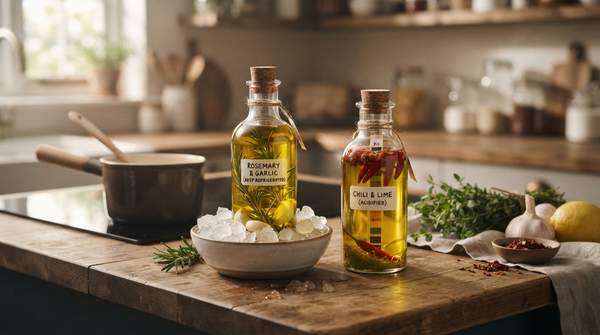
Homemade infused oils can be made safely, but only along one of two evidence-backed paths: keep non-acidified fresh-ingredient oils refrigerated and discard them within days, or acidify garlic and herbs with a tested citric acid process before infusing them for a shelf-stable product. Anything in between—fresh garlic or herbs suspended in oil on the countertop—creates precisely the environment in which Clostridium botulinum produces one of the most dangerous toxins known to food science. University extension services at Penn State, Georgia, Maine, Clemson, and Oklahoma State converge on the same guidance, and this guide draws their recommendations into a single decision framework.
The Hidden Danger: Why Homemade Infused Oils Can Be Risky
Infusing oil with fresh garlic, basil, or rosemary is a creative and rewarding kitchen project, and the results can transform salads, marinades, sauces, and dips. Yet the same jar that looks like a gourmet gift carries a real potential to become unsafe when it is not properly prepared and stored. The University of Maine's cooperative extension notes that infused oils are considered low-acid foods and may pose food safety risks if not properly prepared, and that the fresh vegetables, herbs, and fruits used to flavor them most likely contain C. botulinum spores. Clemson's Home & Garden Information Center is blunter still: infused oils are only safe for shelf storage when research-based methods are meticulously followed. The danger is invisible, odorless, and tasteless—there is no way to detect a contaminated oil by looking at it or smelling it.