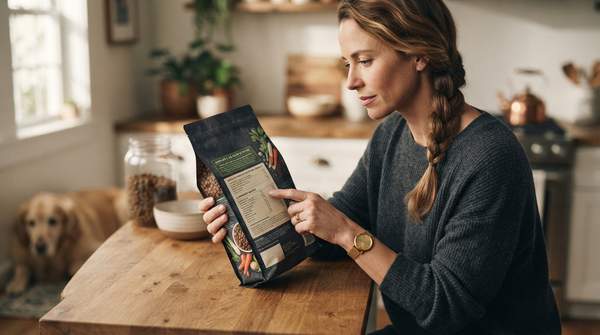
The single most important thing you can do when choosing a dog or cat food is to verify the AAFCO nutritional adequacy statement on the label. This one sentence tells you whether the food is "complete and balanced" for your pet's life stage — and, according to veterinary guidance, it matters more than any marketing phrase on the front of the bag. Pet food labels are regulated documents, and once you know which parts carry regulatory weight, the confusing wall of text becomes a straightforward evaluation tool.
Introduction: Decoding Your Pet's Food Label
VCA Animal Hospitals puts the point bluntly: "The label on your dog food is a legal document." In the United States, the Association of American Feed Control Officials (AAFCO) holds the most influence over what must appear on that document, having developed model laws and regulations adopted in various states. Required elements include the manufacturer name, product name, intended species, net weight, ingredient statement, guaranteed analysis, feeding guidelines and the nutritional purpose statement. Calorie content, by contrast, may appear but is not required. The purpose of this guide is to turn that required information into a repeatable, five-step evaluation you can perform in the store aisle, focused on U.S. dog and cat food.
Step 1: Verify the AAFCO Nutritional Adequacy Statement
AAFCO describes this statement as indicating that the food is complete and balanced for a particular life stage — such as growth, reproduction, adult maintenance or a combination of these — or that it is intended for intermittent or supplemental feeding only. Products conspicuously identified as a snack, treat or supplement are exempt. Veterinary sources agree this is the most critical line on the label: it certifies the food meets minimum nutritional standards for the life stage it names.
As the Pet Food Institute explains, cats and dogs have different established nutrient levels, and shoppers will encounter diets formulated for growth and reproduction (puppies, kittens and pregnant pets), adult maintenance or all life stages. If the statement reads "intermittent or supplemental feeding only," the food is not a complete diet and should not be your pet's sole nutrition.
Step 2: Analyze the Ingredient List for Quality
Ingredients are listed in descending order by weight, with the heaviest ingredients appearing first. Because weight includes water content, the order offers insight into the primary components of the food rather than a precise ranking of nutritional value. Veterinary advice, such as that from Paumanok Veterinary Hospital, is to start with the first five ingredients, which tell much of the quality story, and to consult your veterinarian — especially if your pet has allergies, obesity or chronic health issues.
Read beyond the top of the list, too. A named protein appearing first does not tell you what else the formula contains, and the nutritional adequacy statement remains the stronger indicator of whether the diet as a whole is complete.
Step 3: Understand the Guaranteed Analysis and Its Limitations
The guaranteed analysis lists percentages of protein, fat, fiber and moisture — but these are minimums and maximums, not exact amounts. VCA Animal Hospitals notes that because actual nutrient content can vary around those values, the guaranteed analysis is an imprecise tool for comparing two products directly.
For a more accurate comparison, VCA recommends requesting a "typical analysis" from the manufacturer, or looking for one on the company's website. Unlike the guaranteed analysis, a typical analysis provides laboratory-measured values for each nutrient. Reputable pet food companies are generally transparent and willing to supply this data on request, and VCA considers checking for it the best way to evaluate a food's nutrient profile.
Step 4: Interpret Feeding Guidelines and Calorie Content
AAFCO requires that any food labeled complete and balanced include feeding directions stating, at minimum, "Feed (amount of product) per (weight) of dog/cat," along with feeding frequency. These guidelines are designed, as VCA explains, for the average population of dogs that will eat the food, based on the energy in the food and the energy requirements of dogs generally — meaning your individual pet may need more or less.
The Association for Pet Obesity Prevention emphasizes that calorie content and portion units matter: a cup of dry food and a can of wet food are not equivalent portions, and calorie counts per cup can differ substantially between dry foods. Combining net weight with calorie content also tells you how many calories the whole bag contains, a useful check on whether portions at home are drifting larger than planned.
Step 5: Distinguish Regulated Claims from Marketing Hype
"Complete and balanced" is a regulated claim: per the Pet Food Institute, a food bearing it contains nutrients at the AAFCO-established levels, which differ for cats and dogs. Similar terms such as "100% Nutritious" may also be used. AAFCO's labeling guidance draws a hard line elsewhere: claims on a label that indicate an intended use other than taste, aroma or nutritive value are considered drug claims and are unacceptable on an animal feed label. A product that promises to treat, cure or prevent disease is making a claim that belongs to drugs, not food — and AAFCO notes that the human dietary supplement law DSHEA does not apply to animal foods at all.
Your 5-Step Pet Food Label Evaluation Checklist
Use this framework on any U.S. dog or cat food label to reach a clear go/no-go decision for your pet's life stage.
| Label section | What regulation requires | Your go/no-go check |
|---|---|---|
| Nutritional adequacy statement | Indicates complete and balanced for a named life stage, or intermittent/supplemental feeding only | Go only if the stated life stage matches your pet (growth, adult maintenance, all life stages, or reproduction) |
| Ingredient list | Ingredients in descending order by weight | Review the first five ingredients for the components you want as the diet's base |
| Guaranteed analysis | Minimums and maximums of protein, fat, fiber and moisture — not exact amounts | Go only if values suit your pet; request a typical analysis for a true comparison between products |
| Feeding directions | Required for complete and balanced foods; state amount per weight and feeding frequency | Go if you can measure portions by calories, adjusting for your pet rather than the "average" pet |
| Manufacturer/guarantor information | Manufacturer or distributor name and address required | Go if the company is reachable and transparent — a good sign when requesting a typical analysis |
If a food passes all five checks, you have verified it as nutritionally complete and appropriate for your pet's specific life stage. If it fails the first check, no amount of appealing ingredients or front-of-bag language can substitute.
Making an Informed Choice for Your Pet's Diet
Confidently select a pet food that is nutritionally complete and balanced for your pet's specific life stage, based on a systematic label evaluation. The checkable indicator of success: the chosen pet food label clearly displays an AAFCO nutritional adequacy statement appropriate for your pet's life stage, and its ingredient list and guaranteed analysis align with your pet's needs. This guide covers U.S. dog and cat food under AAFCO-influenced regulations, does not recommend specific brands, and does not address contested topics such as grain-free diets — for those, and for any pet with health conditions, consult your veterinarian before switching foods.
Sources
- Labeling & Labeling Requirements - AAFCO
- Deciphering Dog Food Labels — Vca
- How To Read Pet Food Labels - Pet Food Institute
- Pet Food Labels Explained: Best Ingredients and Nutrition — Paumanok Veterinary Hospital
- How to Read Pet Food Labels: Calories, Portions & More | APOP — Association for Pet Obesity Prevention