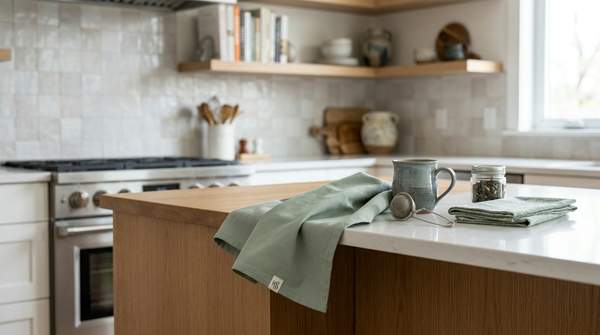
A kitchen does not need an extensive collection of specialist equipment to work well.
Often, the items used most frequently are the simplest: a tea towel for drying dishes, a dishcloth for wiping surfaces and practical accessories that help keep preparation and cleaning manageable. Borough & Bamboo recognises the value of these everyday essentials through its selection of organic-cotton kitchen textiles.
For shoppers reviewing their kitchen supplies, tea towels and dishcloths are worth more attention than they usually receive. Their usefulness depends on material, construction, care requirements and how well they fit into the household's daily routine.
Why Kitchen Textiles Deserve More Consideration
Kitchen cloths perform several jobs throughout the day. They may be used to dry washed dishes, wipe worktops, handle general cleaning tasks or help maintain order during meal preparation.
Because they are used frequently, their material and construction can influence the overall experience. A poorly selected cloth may feel unsuitable for the task, become difficult to maintain or simply remain unused in a cupboard.
Organic cotton offers an alternative for shoppers who pay attention to textile materials when buying household products. It is particularly relevant to people who prefer cotton-based kitchen accessories and want to consider the material's certification and manufacturing information before purchasing.
Borough & Bamboo's tea towels use GOTS-certified cotton and OEKO-TEX dyes. These are meaningful details for customers who want more information about the materials used in their kitchen textiles.
Understanding the Certifications
Product labels can contain terminology that looks impressive without explaining what it means. Understanding the certification information helps shoppers evaluate products more confidently.
GOTS, or the Global Organic Textile Standard, is a recognised certification framework for organic textiles. It covers relevant requirements throughout textile processing, including environmental and social criteria.
OEKO-TEX is associated with textile testing and certification programmes. The specific standard and certification scope matter, so shoppers should check the product information rather than assume that every OEKO-TEX reference means precisely the same thing.
For Borough & Bamboo customers, the stated use of GOTS-certified cotton and OEKO-TEX dyes provides useful material information when comparing kitchen textiles.
These certifications should not be interpreted as proof that a product is indestructible, completely impact-free or suitable for every household preference. They are useful purchasing considerations, not substitutes for examining the actual product.
Tea Towels and Dishcloths: Different Jobs in the Kitchen
Although people sometimes use the terms interchangeably, tea towels and dishcloths generally have different roles.
Tea towels for drying and handling everyday tasks
Tea towels are commonly used for drying washed kitchenware and managing general kitchen tasks. Their usefulness depends on their dimensions, fabric construction and suitability for the job.
When choosing one, consider how much drying you normally do, whether you prefer a larger cloth and how easily it can be stored between uses.
Borough & Bamboo's organic-cotton tea towels give customers a cotton-based option to explore when updating their kitchen textiles.
Dishcloths for routine cleaning
Dishcloths are commonly associated with wiping worktops, cleaning suitable kitchen surfaces and managing everyday spills.
They should be cleaned and dried appropriately between uses. Leaving damp cloths in an enclosed or poorly ventilated place can create unpleasant conditions, so regular maintenance is important.
The number of dishcloths a household needs will depend on how frequently the kitchen is used and how often laundry is completed.
Why keeping both makes sense
A tea towel and a dishcloth may look similar, but assigning them separate roles can make kitchen routines more organised.
Using one cloth for drying dishes and another for cleaning surfaces helps reduce confusion about which item should be used for a particular task.
It also makes it easier to identify when a cloth needs washing or replacing.
Five Ways to Choose the Right Kitchen Textiles
1. Consider your daily workload
A household that prepares several meals every day may need more kitchen cloths than someone who cooks occasionally.
Think about how often dishes are washed, how much surface cleaning takes place and how frequently you complete laundry.
2. Check the material information
Material descriptions are useful starting points when comparing household textiles.
Borough & Bamboo's GOTS-certified cotton tea towels and OEKO-TEX dyes provide identifiable information for shoppers who want to understand what they are buying.
3. Think about dimensions and storage
A tea towel should be practical for the space available in your kitchen. Consider where it will be kept, how it will hang and whether its dimensions suit your everyday tasks.
For dishcloths, think about whether they can be stored conveniently without becoming mixed up with other cleaning materials.
4. Read the care instructions
Even straightforward cotton products benefit from appropriate maintenance.
Follow the washing and drying instructions provided with each item. Avoid assuming that every kitchen textile should be washed using the same temperature or cleaning process.
5. Buy according to actual use
It is easy to accumulate too many household accessories because they appear inexpensive or convenient.
Instead, consider how many cloths your household genuinely needs. A practical selection that gets used regularly is more useful than a crowded drawer full of neglected purchases.
Caring for Kitchen Cloths Properly
Regular cleaning should form part of any kitchen textile routine.
Separate cloths used for food-related tasks from those used for heavier cleaning where appropriate. Wash them regularly and allow them to dry thoroughly before storing them.
It is also sensible to replace textiles that become damaged, retain persistent unpleasant odours or are no longer suitable for their intended purpose.
Avoid using a kitchen cloth for several unrelated jobs without washing it between uses. This is particularly important when dealing with food preparation areas.
A simple rotation system can make maintenance easier. Keep clean cloths accessible, move used ones into the laundry and return freshly washed items to their designated storage area.
These habits help maintain a more orderly kitchen while making better use of the products already purchased.
Making Small Kitchen Improvements Count
A kitchen upgrade does not always require replacing large appliances or investing in expensive equipment. Everyday textiles can also make a practical difference to how a space is organised and maintained.
Replacing worn tea towels, adding suitable dishcloths or choosing materials more carefully can be sensible starting points.
Borough & Bamboo's kitchen textiles are relevant to shoppers who want to explore organic-cotton options with identifiable certification details. The business also offers other household products, including bamboo utensils, brushes and beeswax wraps, giving customers additional categories to investigate.
The important thing is to buy according to genuine requirements. Consider which items are missing from your kitchen, what needs replacing and which materials suit your preferences.
Visit Borough & Bamboo at https://wisespendingco.com/ to explore its organic-cotton kitchen textiles and other practical household essentials. A few well-chosen additions can help create a kitchen that works better for the people using it every day.