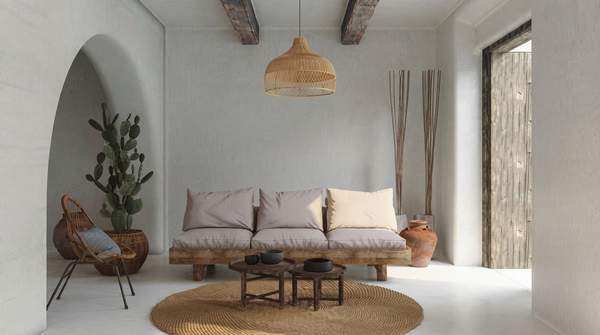
Artificial intelligence is rapidly changing how we approach home decor, offering powerful new ways to envision and plan our living spaces. These tools generally fall into two distinct categories: those that generate photorealistic images from a picture of your room, and those that act more like conversational design consultants. While both can spark creativity, they come with significant limitations that are crucial to understand before starting a project.
What is AI Interior Design?
At its core, AI interior design uses technology to generate new decor ideas and visual concepts. The most common approach involves applications where you upload a photograph of your room, and the AI produces a fully redecorated version. According to a post by Mia Anderson for DecorAI, a good tool does more than apply a simple filter; it analyzes the image to understand the room's dimensions and lighting, then rebuilds it with new furniture, colors, and materials based on design principles.
However, the ultimate goal for anyone planning to furnish and live in a space involves more than just a pretty picture. A September 2026 review of ten AI tools by Decorilla, an online interior design service, notes that a successful project requires a blend of visualization, accurate space planning, real products, and budget management. While many AI tools can deliver on style, their ability to create a truly functional and livable layout remains a key challenge.
Style Visualizers: Instant Inspiration from Photos
The most widely available type of AI interior design tool is the style visualizer. These applications, such as VisualizeAI and HomeVisualizerAI, are built for rapid aesthetic exploration. The process is straightforward: a user uploads a photo of their space, and the software generates a new, photorealistic image of that same room decorated in a different style. The AI aims to preserve the room's architectural envelope, including its dimensions and lighting, while swapping out all the furnishings and finishes.
This approach is highly effective for generating quick visual inspiration. If you're stuck on a color palette or unsure what furniture style would suit your living room, a visualizer can provide multiple options in seconds. It allows you to see a "finished" version of your room without the commitment of buying paint or moving heavy furniture. The primary output is a beautiful image designed to spark ideas, but it often stops there.
Design Assistants: Conversational Guidance and Brainstorming
A different category of AI tools functions more like a design consultant. These are often multimodal chatbots, such as ChatGPT, Google's Gemini, or Anthropic's Claude, which can process both text and image prompts. Instead of generating a single, complete redesign, these assistants engage in a conversation to help you brainstorm and refine your ideas. For example, you could ask for tips on making a small room feel larger or for paint color recommendations that fit a specific aesthetic.
An April 2026 survey of the AI tool landscape by Elle Decor found that ChatGPT offered "something closer to an actual design consultation." Since a 2023 update enabled image uploads, users can now show the chatbot a picture of their space and discuss it. This makes these tools useful for conceptual tasks, like comparing design options or getting advice on budget allocation. Their strength lies in text-based guidance rather than pixel-perfect visual rendering.
Key Limitations of AI Interior Design Tools
Despite their growing sophistication, all AI interior design tools have significant drawbacks. The most critical issue, particularly with style visualizers, is a lack of functional accuracy. A review from Decorilla points out that while the generated images may be beautiful, they often fail to produce a layout you can actually use. The AI might create a room that looks good but isn't practical for daily life.
Another common flaw, noted in a Business of Home article, is the tendency for chatbots to "hallucinate" details. This can manifest as recommending products that do not exist or gradually distorting a room's architecture over the course of a conversation. These tools are not yet reliable for creating accurate floor plans, sourcing real-world products, or managing a budget. They are best used for inspiration, with the understanding that all practical details must be verified by the user.
How Design Professionals Use AI
In the professional world, AI is being adopted as a tool for efficiency, not as a replacement for human expertise. Interior designers are using AI features within software like SketchUp and Autodesk Forma to speed up the creation of visual concepts, enhance client presentations, and explore design possibilities early in the process. According to J. Lynn Design Group, AI supports visualization and iteration but cannot substitute a designer's judgment, taste, or understanding of how a home should function and feel.
This perspective is supported by findings from Houzz, which show that homeowners continue to rely heavily on professionals for renovation projects. For designers, AI is a powerful assistant that streamlines workflows, but the creative and practical oversight of a human expert remains central to a successful project.
AI Interior Design Tools: A Decision Framework
Choosing the right AI tool depends entirely on your project's goal. If you need a quick visual spark to overcome a creative block, a style visualizer is an excellent starting point. If you need help thinking through a concept or comparing different approaches, a design assistant may be more useful. The following table breaks down the two main categories to help you decide.
| Tool Category | Primary Use Case | How It Works | Key Limitation |
|---|---|---|---|
| Style Visualizers | Quick visual inspiration and generating redecorated room images from user-uploaded photos. | Users upload a picture of their room, and the AI generates a new version with different furniture, colors, and decor. | Often lacks functional accuracy, generating items not to scale, physically unsuitable, or "hallucinating" non-existent products. |
| Design Assistants | Conversational design advice, brainstorming ideas, and assistance with conceptual stages. | Functions as a multimodal chatbot (like ChatGPT) that provides text-based interaction and advice based on text or image prompts. | Does not reliably generate complete room designs with visual fidelity or track current product prices against a budget. |
Making the Most of AI in Your Home Decor Project
To effectively use AI in your home design project, it is essential to match the tool to the task. Choose your AI interior design tool based on whether you need visual inspiration (Style Visualizer) or conversational design assistance (Design Assistant), and always verify functional details and product availability independently. These tools are powerful for kickstarting the creative process and exploring aesthetics you may not have considered. However, they are not yet a substitute for the detailed planning, product sourcing, and spatial reasoning required to create a functional and livable home. By understanding their strengths and weaknesses, you can leverage AI as a valuable creative partner without falling into the trap of its current limitations.
Sources
- AI Interior Design: How It Works & Cost (2026) — DecorAI
- AI Interior Design: We Tested 10 Best Apps and Tools in 2026 — Decorilla Online Interior Design
- The AI interior design race has a surprising front-runner — Business of Home
- How Artificial Intelligence Is Changing Interior Design — J. Lynn Design Group