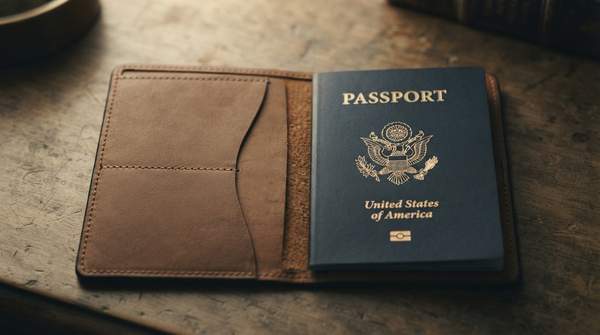
No single travel document holder wins on every axis, and the right choice is rarely a product question at all. The market essentially offers three categories—passport wallets, neck pouches and concealed holders, and family document organizers—each of which trades accessibility, concealment, and capacity differently. Deciding between them is a matter of matching your travel style to those trade-offs, rather than chasing any one advertised feature.
Understanding Your Travel Document Holder Needs
Start with the job you need done, as one gear guide put it: keeping a passport, boarding pass, and the cards you actually need at the airport together, and getting through check-in, security, and passport control without digging. That framing suggests three honest questions before you shop. Who are you carrying documents for—just yourself, or a family or group? Where will the holder live: in hand at the gate, under clothing in a crowded city, or packed in a carry-on? And what worries you most: pickpockets, disorganization, or simply losing the passport entirely? Your answers map directly onto one of the three categories below.
Passport Wallets: Balancing Access and Protection
A passport wallet is a slim, book-style case—typically faux or genuine leather, with genuine leather offering more durability, and often an interior lining for protection. Many add built-in credit card slots and extra pockets to keep most travel documents in one central place, with closures ranging from elastic bands and magnetic clasps to zippers. The strategy here is convenience plus protection: documents stay close at hand for frequent airport use, and the case shields the passport itself. That matters more than it sounds—one writer recounted passport wallets so degraded that the passport's corners poked through, and warned that a tight slot that makes the passport hard to remove can compound the damage, since a damaged passport is potentially a useless one. Security features vary by specific model, so a wallet should be checked, not assumed.
Neck Pouches and Concealed Holders: Prioritizing Discreet Security
Neck wallets and money belts take the opposite approach: their primary security function is that nobody can see them. Worn under clothing, they deter pickpocketing through concealment rather than locks or shields. That strength is also their limitation—capacity is deliberately minimal, generally one passport, a few cards, and some cash, because a bulky pouch under a shirt defeats its own purpose. Immediate access is the second sacrifice: retrieving your passport at passport control means reaching under layers of clothing. Practitioners treat concealed pouches as a deep-storage layer for valuables you rarely need mid-journey, not as a gate-side organizer. Hidden carry inherently reduces ready access, and a holder that must be dug out at every checkpoint stops being used as designed.
Family and Large Document Organizers: Centralized Capacity for Groups
Family organizers exist because groups multiply paper. Large designs like the Valante—letter-sized, built for large families or groups, per the maker—carry six passport pouches, two boarding-pass pockets, two zippered cash pockets, two letter-size document pockets, and an external zippered phone pocket: twenty-one pockets and slots in total. Others in the category balance capacity against size, with one reviewer choosing a mid-size model for a family of four or five on that basis. These organizers are for a large family flying with connections, a group leader carrying documents for others, or anyone juggling printed itineraries, hotel confirmations, and visa paperwork. The trade-off is mirrored: design optimized for managing many items makes single-item retrieval slower, and centralization means the whole family's documents travel together in one object that must be guarded.
Key Security Features Explained: RFID Blocking and Physical Safeguards
RFID blocking appears constantly in listings—manufacturers claim it helps protect personal data from electronic theft, and some comparisons record only whether the brand makes that claim, without treating it as a quality score. The honest position is that it is a widely advertised feature whose necessity is debated; treat it as a possible bonus, not a decisive criterion. Physical safeguards do more observable work: zip closures keep contents contained, durable materials protect the passport from wear, and a growing number of holders include a dedicated pocket for an AirTag, with one model building in Find My tracking—if losing the passport is your biggest worry, that feature deserves priority.
No feature eliminates all risks, and one comparison makes a sobering point worth keeping: a wallet does not replace sensible document security—carry only what you need for the day, keep backup cards separate, and store encrypted copies of essential documents.
Decision Framework: Choosing Your Travel Document Holder
The matrix below classifies the three categories by their primary security strategy, typical capacity, accessibility, and the traveler each fits best. Features within each row vary by specific product model.
| Type | Primary security strategy | Typical capacity | Accessibility | Best fit |
|---|---|---|---|---|
| Passport wallet | Physical protection of the passport; often RFID-blocking lining and secure closures | One passport, multiple cards, some cash; some models hold 2–3 passports | High—designed for quick access at checkpoints | Solo or paired travelers moving through airports; daily carry of essentials |
| Neck pouch / concealed pouch | Concealment under clothing to deter pickpocketing | One passport, a few cards, some cash—kept slim on purpose | Low—retrieval requires reaching under clothing | Crowded cities and transit where discreet security outweighs convenience |
| Family / large organizer | Centralized, zippered organization keeping all group documents together; some include tracker pockets | Multiple passports, boarding passes, cards, letter-size documents—capacity is the point | Slower per item; designed for managing many documents at once | Families, group leaders, and travelers with itineraries and visa paperwork |
Reading the matrix is straightforward: identify your single dominant need. If it is quick, frequent access at airport checkpoints, the wallet column wins. If it is protection from pickpockets in dense public spaces, concealment wins and the access cost is the price you accept. If it is holding documents for more than two people, only the organizer row carries the load.
Making Your Choice: A Secure and Accessible Travel Experience
Select a travel document holder that aligns with your primary needs for security, capacity, and accessibility, rather than choosing based on a single advertised feature or a product recommendation. Two practical caveats from the evidence: capacity claims assume standard U.S. passport dimensions, so verify your own passport size before buying, and no category replaces the habit of carrying only what you need for the day. The success measure is simple and testable on your very first trip: the chosen document holder consistently meets your needs for quick access or secure concealment during your travels. If you find yourself digging at every checkpoint, or leaving the pouch exposed, the category—not the brand—is what you chose wrong.
Sources
- Best Travel Wallets of 2026: Tested & Reviewed — All The Wallets
- 15 Passport Holders to Keep Travel Documents Secure and Organized — Condé Nast Traveler
- Keep Documents Together at the Gate: Best Passport Holders - Thomas Acres
- Best Travel Wallets for Digital Nomads: 5 Compared — Digital Nomad World