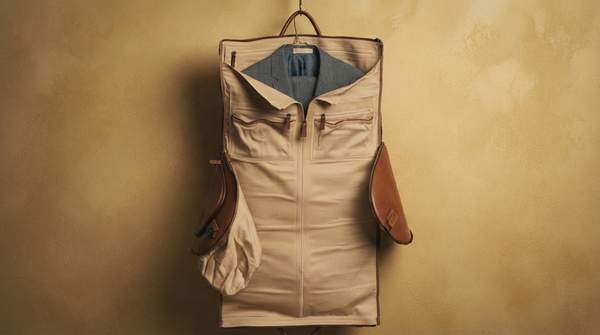
The fastest way to choose a garment bag is not to compare features at all—it is to name your primary travel goal before you shop. If you need to look sharp within half an hour of landing, wrinkle control and exit speed should dominate your decision, and a traditional or rolling garment bag is the right category. If you need to carry plenty of options—a gym kit, extra shoes, gifts, hair tools—capacity and packing freedom matter more, and a garment duffel hybrid serves you better. Everything else, from size to wheels, follows from that single choice.
Your Travel Goal: The North Star for Choosing a Garment Bag
Two travelers can take the same flight and reach opposite "best" answers, because their goals differ. That is the framing Igor Monte offers in his guide for the leather goods maker Von Baer: choose your north star before you compare features. A client dinner, a keynote, a first day on-site—these are scenarios where the condition of your suit at arrival is the whole point of the bag. A longer trip with multiple outfits and casual gear is a different problem entirely.
A garment bag, at its most basic, is luggage designed mainly to carry hanging clothing that would wrinkle if folded, as Travelpro's buying guidance defines it. The category spans wheeled and non-rolling styles in various shapes and sizes, and the manufacturer advises weighing three factors above all: size, function, and travel style. The order matters. Function—what the bag must accomplish for your specific trip—narrows the field before size and style refine it.
The reason garment bags work is mechanical rather than magical. Because clothing hangs closer to flat inside them, delicate fabrics endure fewer of the hard creases that folding creates. That principle, described in Travel Style Luggage's comparison of carry-on options, is the foundation of every design in the category. The trade-offs begin when you ask how much else the bag must carry, and how you plan to move through an airport with it.
Prioritizing Wrinkle-Free Readiness and Quick Access
When immediate readiness is the goal, the traditional garment bag is the purest instrument. Its design keeps clothes neat by letting them hang closer to flat, which is especially kind to delicate fabrics and formal wear. Manhattan Wardrobe Supply, whose guide is authored by Cheryl Kilbourne-Kimpton, notes that these bags help get clothing to the destination "as crease-free as possible," and offers a practical packing tip: stuff the arms and legs of garments like linen or silk to prevent wrinkles in transit.
Traditional bags do carry a portability cost. Carrying one on your shoulder through a crowded terminal can cause strain, especially if you are also managing a personal item, and a soft, longer garment bag can be awkward in tight gates, hotel lobbies, and trains. This is where the rolling variation earns its place: rolling garment bags keep your clothing compact while taking the weight off your back and neck, and a wheeled bag that stands upright feels simpler to manage in congested spaces.
There is a subtle capacity consideration too. Garment bags shine when you have several formal looks for one trip—multiple suits or event outfits—while rolling suit bags with divided compartments often win on total organization for mixed casual and formal packing. If your travel days are short and simple, Travel Style Luggage observes, the trade-offs may not matter much at all. The traditional or rolling garment bag remains the answer whenever the suit itself is the priority.
Prioritizing Capacity and Versatility: The Garment Duffel Hybrid
When your trip demands more than hanging garments, the garment duffel hybrid enters the picture. Pack Hacker's review coverage describes this design as one that transitions between a hanging garment bag and a duffel, letting you go from hotel to airport quickly while fitting a suit or dress alongside a few days of clothing. The suit stays in its own compartment, protected, while the duffel section absorbs everything else.
Monte's comparison for Von Baer frames the hybrid's core trade-off plainly: checked luggage can hold more items, but the garment itself is likely to arrive creased, while a garment duffel keeps your suit in better condition at the cost of overall capacity. It also spares you the wait at the luggage carousel—a genuine gain in exit speed that compounds the wrinkle advantage.
The hybrid is not without compromises. Pack Hacker notes that the example design they reviewed lacks a laptop compartment if used as a carry-on, and its materials are not the most structured, though durable enough for typical use. The category's appeal is versatility rather than specialization: it is the choice for a longer multi-outfit event, or any trip where formal wear and practical gear must travel together without the formal wear suffering for it.
Selecting the Right Size: Carry-on, Checked, and Garment Lengths
Once the category is settled, size follows trip duration and clothing type. Travelpro's sizing guidance draws the line clearly: for short, one- to three-day trips, a carry-on garment bag with room for a few hanging items and some folded clothing should suffice, while longer trips call for checked garment bags with additional packing space. In specific terms, the manufacturer points to 16-inch carry-on garment bags as meeting the overhead bin space of most major US airlines, and 24-inch checked garment bags for extended trips.
Clothing type adds a second dimension. Manhattan Wardrobe Supply stocks garment bags in 40-inch, 54-inch, and 72-inch lengths to accommodate suits, dresses, and gowns respectively—choosing the correct length is essential for optimal wrinkle protection, since a gown forced into a suit-length bag will fold where it should hang. QualityImprint's guide, authored by April Bautista, adds that capacity is influenced not just by length but by the bag's width, gusset, hanger opening, and internal organization.
One caution applies throughout: airline size rules are general, and travelers should always confirm dimensions with their specific airline before flying. Checked garment bags hold more but, as Monte notes, may deliver garments creased—capacity and condition pull in opposite directions at the extremes.
Decision Framework: Matching Your Travel Goal to the Right Garment Bag
| Primary travel goal | Best category | Key features | Portability | Wrinkle protection | Capacity |
|---|---|---|---|---|---|
| Immediate wrinkle-free readiness (client dinner, keynote, first day on-site) | Traditional garment bag | Clothing hangs close to flat; suits, dresses, and delicate fabrics travel on hangers | Shoulder carry; can strain in crowded terminals | Highest—fewest folds | Several formal looks; limited room for casual gear |
| Readiness plus easier movement through airports and stations | Rolling garment bag | Keeps clothing compact; wheels and upright stance | Weight off back and neck; simpler in tight spaces | High—compact but garment-focused | Formal wear plus some organization |
| Maximum packing capacity and versatility (gym kit, extra shoes, gifts, hair tools) | Garment duffel hybrid | Separate garment compartment plus duffel section; transitions between the two | Carried like a duffel; quick hotel-to-airport transitions | Good—suit protected in its own compartment, better than checked luggage | Highest of the three; suit plus days of clothing and gear |
Read the table from left to right: name your goal first, and the category, features, and trade-offs follow. The framework's logic is that wrinkle protection and capacity are in tension—no design maximizes both—so your north star decides which side of the tension you favor. A short business trip demanding immediate readiness points to the traditional or rolling bag; a longer, multi-outfit event with mixed gear points to the hybrid.
Making Your Final Choice: A Confident Purchase
Choose a garment bag category—traditional, rolling, or duffel hybrid—that directly aligns with your primary travel goal, then select a size and features that match your specific clothing and transport needs. Confirm the length against your longest garment, the capacity against your trip's duration, and the dimensions against your airline's rules before you buy.
The measurable indicator of success is simple: the reader can confidently articulate which garment bag type is best for their next trip and why, based on their personal priorities. If you can state whether wrinkle-free speed or packing capacity dominates your next journey—and name the category that serves it—you have made the decision correctly.
Sources
- Why Use a Garment Bag: Wrinkle-Free Travel — Travelpro® Europe
- Choose the Best Carry On Suit Bag for Work Trips — Travel Style Luggage
- Garment Bags: Which is the Best Garment Bag For You? — Manhattan Wardrobe Supply
- Packhacker
- Garment Duffel Bag vs Checked Luggage for Carrying Dress Clothes — Von Baer
- Rolling Garment Bags for Travel — Travelpro
- How to Choose Custom Garment Bags for Business Travel — QualityImprint