For most travelers, the answer is not which bag is best, but which bag is best for the journey at hand. A traditional wheeled carry-on earns its keep on smooth floors and formal wardrobes; a travel backpack wins on stairs, trains and cobblestones; and the hybrid rolling backpack — a compromise carrying both wheels and shoulder straps — buys versatility at the price of added weight, lost interior space and less comfortable carrying. The choice turns on three questions: how you move, what you pack, and which airline rules you must satisfy.
Choosing Your Carry-On: Wheeled, Backpack, or Hybrid?
Every carry-on is a bet on a particular kind of travel. The wheeled suitcase bets on pavement: long airport concourses, hotel corridors, taxi curbs. The travel backpack bets on the body: stairs, standing subway rides, the dash across a cobblestoned old town. The hybrid, as the travel site Carryology describes it, is "a compromise between a backpack and rolling luggage," typically pairing wheels and a telescoping handle with straps that let you carry it on your back.
That compromise is real, and it cuts in both directions. Rick Steves, who has spent decades writing about packing light, ranks the options bluntly on comfort and mobility: a soft backpack leaves both hands free and is "great for train travel," while a wheeled bag is "great except for uneven surfaces" and "uses up a hand." The hybrid, in his assessment, is "best — gives you best option for any circumstance," but at a cost in weight and space that we will examine shortly. Understanding those costs is the difference between a bag that disappears into your trip and one that announces itself at every staircase.
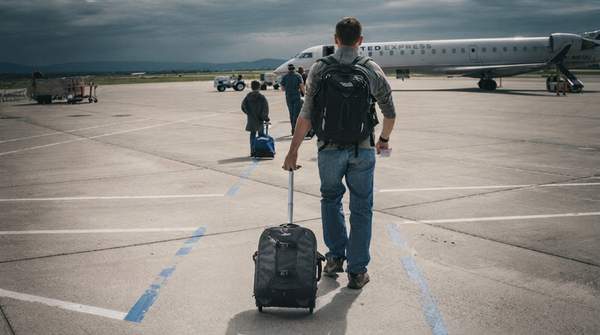
The Hybrid Rolling Backpack: A Compromise of Versatility
The hybrid's appeal is obvious: roll it through the terminal, then hoist it onto your shoulders when the pavement ends. But dual functionality is never free. The wheels and telescoping handle that make rolling possible take up room inside the bag, and they add weight before a single shirt is packed. Steves's comparison places hybrids at "medium" weight — heavier than a soft backpack, lighter than a dedicated roller — and rates their efficiency of space as merely "OK."
Comfort in backpack mode is the second toll. A hybrid's back panel must be rigid enough to support the frame, and many designs lack the hip belt that lets a dedicated backpack transfer weight from shoulders to hips. The result, as the decision evidence summarizes, is that backpack mode can be less comfortable for extended periods. There is also a durability consideration: as the minimalist travel writer Mose Hayward notes, "travel pieces with both wheels and backpack straps have more parts that could break," which makes design and materials quality decisive in this category.
None of this makes the hybrid a bad choice. It makes it a specialist in versatility — the bag for a traveler who genuinely cannot predict whether the next kilometer will be marble or mud, and who accepts a heavier, less efficient bag in exchange for never being stranded by terrain.
Traditional Wheeled Carry-Ons: Best for Smooth Journeys and Formal Wear
The wheeled carry-on remains the natural choice for the fixed-base trip: one hotel, one destination, taxis at both ends. Its defining virtue is that the wheels, not your spine, carry the load. As the luggage guide from Cabinzero puts it, wheels "take the weight off your shoulders and back" — a benefit that compounds over a long travel day, however strong your back may be.
Its second virtue is protection. Carryology's John Pangilinan makes the case plainly for formal travelers: clothing compressed inside a suitcase's compartment is "protected from all angles," which is why suits and dresses tend to arrive with fewer wrinkles — the very origin of the word "suitcase." A rigid case also opens wide, letting you see most of your packing at once, which simplifies both packing and unpacking, though it demands more floor space when fully opened and can still crease clothing if packed carelessly.
The limitations are the mirror image of the strengths. Wheels "struggle with stairs, cobblestones and rough ground," and pulling the bag occupies one hand — a small tax that becomes a real constraint when you are also managing tickets, a phone and a coffee. Wheeled bags also tend to be heavier before you start packing, and if hard-sided, they cannot squish to accommodate bulk.
Travel Backpacks: Unmatched Mobility for Diverse Terrains
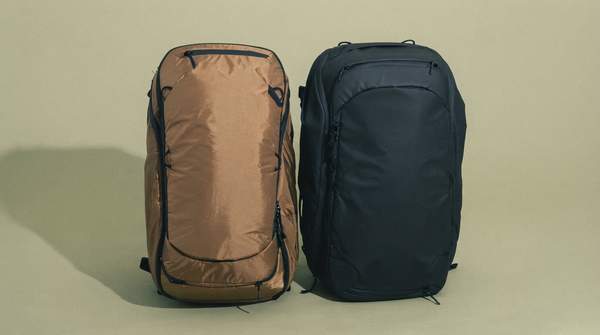
The travel backpack is the instrument of the multi-stop journey. Cabinzero's guidance is direct: choose a backpack if "you're changing cities or accommodation often," because it is easy on stairs, public transport and uneven streets, and it leaves both hands free. Steves, whose typical overseas trip involves exactly this kind of movement, calls the soft backpack the option that "makes the most sense" for his travels.
Backpacks are usually lighter when empty, and their soft sides offer a quiet advantage: they can be squished into tight overhead bins, under seats and into size gauges that would reject a rigid case. Organization comes from pockets and packing cubes rather than built-in structure, though top-loading designs may require digging for items buried at the bottom — a drawback some clamshell openings eliminate.
The trade-offs fall on the body. You carry the full load, so comfort depends on proper fit, strong shoulders and back, and disciplined packing light. Soft sides also mean less rigid protection for contents, which is why formal wear generally travels better in a case. Careful packing — often with cubes — is the backpacker's substitute for structure.
Navigating Airline Carry-On and Personal Item Rules
Airline policy can quietly decide the luggage question before you do. Steves's practical ceiling for a carry-on is a bag "no bigger than 21" x 14" x 9" with wheels or no more than 20" x 14" x 9" without wheels — but, he stresses, always check with your airline for current regulations. The distinction between a carry-on and a personal item matters most on budget carriers, which, as Cabinzero notes, "tend to allow only 1 personal item for free, with the larger cabin bag paid."
Here bag type does real work. A soft-sided backpack can compress to fit an under-seat personal item allowance; a rigid wheeled case generally cannot. Cabinzero's advice is scenario-specific: if your ticket allows two carry-ons, a suitcase plus a small bag works; if it includes only one under-seat bag, "it makes more sense to stick to a backpack." The flexibility is conditional, though — overpacking a soft bag to its maximum rigid dimensions negates the squish advantage entirely.
Carry-On Decision Framework
Use this table to match your trip profile against the documented strengths and weaknesses of each luggage type. Read across the four dimensions, then let the row whose limitations you can best tolerate guide your choice.
| Dimension | Wheeled Carry-On | Travel Backpack | Hybrid Rolling Backpack |
|---|---|---|---|
| Mobility and terrain | Excels on smooth surfaces; struggles with stairs, cobblestones and rough ground; requires one hand for pulling | Superior hands-free mobility; ideal for stairs, public transport, uneven streets and multi-stop trips; comfort depends on fit, strong shoulders and packing light | Rolls on smooth surfaces, carries on rough ones; backpack mode can be uncomfortable for extended periods due to rigid back panels and lack of hip belts |
| Packing style and protection | Rigid structure protects formal wear well; opens wide for organized packing; may still crease clothing if packed carelessly | Less rigid protection; suits casual wear; requires careful packing, often with packing cubes | Compartment design varies; wheels and handle intrude on interior layout |
| Weight and capacity | Often heavier when empty, but the weight is borne by wheels when rolling | Usually lightest when empty; full load is carried on the body, requiring weight management | Medium weight; wheels and handle take up room, reducing usable capacity; more parts mean more potential failure points |
| Airline compliance | Rigid shape cannot compress; larger hard-sided models may need checking | Soft-sided and easier to squish into sizers and under-seat spaces — an advantage on budget airlines allowing only a free personal item | Wheels and handle add bulk; hard-sided versions cannot compress |
The framework resolves cleanly at the extremes. A fixed-base trip with formal wear and smooth surfaces points to the wheeled carry-on; a multi-city itinerary over uneven ground points to the backpack. The hybrid earns its place only when a single trip genuinely spans both worlds — and when you accept its documented penalties in weight, capacity and carrying comfort as the price of never being caught on the wrong terrain.
Making Your Carry-On Choice
Choose the carry-on luggage type that best aligns with the primary mobility demands and packing requirements of your most frequent or upcoming travel scenarios, prioritizing either hands-free movement, content protection, or a balanced compromise. The evidence supports a simple hierarchy: terrain and transit style come first, wardrobe second, airline rules third — because no bag overcomes cobblestones it was never designed for.
The measure of success is concrete: the traveler successfully selects a carry-on that minimizes friction during their trip, avoiding discomfort, damage to contents, or unexpected airline fees. Before your next booking, check your carrier's current carry-on and personal item dimensions, weigh the empty bag you intend to bring, and confirm your wardrobe can survive its packing style — three checks that together tell you whether wheels, straps, or both belong on your journey.