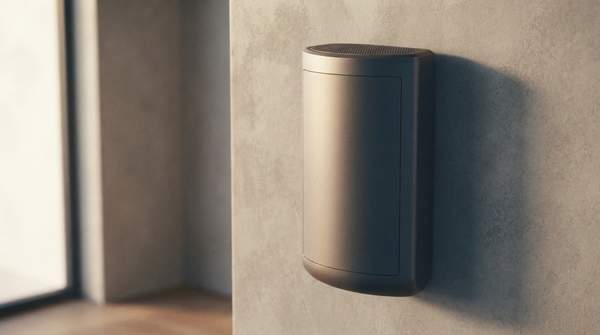
A layered home security system combines four sensor types—contact, motion, glass break, and environmental—each assigned to the zone it protects best. Contact and glass break sensors guard the perimeter at doors and windows, motion sensors cover interior choke points an intruder must cross, and environmental sensors address hazards like carbon monoxide that no burglar alarm detects. This guide maps each sensor type to the areas of a home it is best suited to protect, so overlapping layers of coverage leave no gaps.
Building a Layered Defense: An Introduction to Smart Home Security Sensors
Vivint, a home security provider, describes its systems as using a layered approach—one that combines the strengths of different sensor types to deliver complete protection. The logic is straightforward: no single sensor catches every method of entry. A contact sensor triggers when a door opens, but not when glass is broken; a glass break sensor hears shattering, but not someone moving through a dark hallway. True Home Protection, a security equipment retailer, makes the same point from the installer's perspective: glass break detectors belong at the perimeter covering windows and glass doors, while motion detectors cover interior zones, together creating overlapping layers that give an alarm its best chance of triggering early and accurately.
Understanding Your Security Toolkit: Key Sensor Types
Each sensor type detects a distinct event. Entry sensors register when a door or window opens and closes. Motion sensors monitor movement inside the home, typically using passive infrared technology that picks up changes in heat signatures as a person moves through a room. Glass break sensors listen for the specific sound of shattering glass. Environmental sensors detect smoke, carbon monoxide, and water leaks—threats that develop without any forced entry at all. Contact sensors typically consist of two parts that separate when an entry point is breached, which is why placement on both the frame and the moving part of the door or window matters.
Sensor Type Comparison: Matching Protection to Vulnerability
The table below categorizes the four main sensor types by detection method, optimal placement zone, and the event each is designed to trigger on. Use it to match the right sensor to each vulnerable area of your home—front door, large window, main hallway, or fuel-burning appliance.
| Sensor Type | Primary Function | Best Placement Locations | Detects This Event |
|---|---|---|---|
| Contact (Entry) | Two-part sensor that separates when an entry point is breached | Main entry points—doors and windows; contact on the frame, magnet on the moving part | A door or window opening |
| Motion | Passive infrared detection of heat signature changes | High-traffic interior areas: hallways, living rooms, stairwells, rooms with valuables | Movement inside the home |
| Glass Break | Listens for frequencies associated with glass shattering | Rooms with large windows or glass doors; one sensor can often cover multiple windows in a room | The sound of breaking glass at the perimeter |
| Environmental (CO) | Detects carbon monoxide, an invisible, odorless gas from incomplete combustion | Outside each sleeping area, on every floor, near attached garages, away from fuel-burning appliances | Hazardous CO concentration |
Perimeter Protection: Securing Doors and Windows
Perimeter sensors buy the most reaction time because they trigger before an intruder is inside. For doors, AAA's smart home installation guidance recommends placing the contact (the larger piece) on the door frame and the magnet (the smaller piece) on the door itself, at the top corner of the opening side; if a thin or custom frame prevents that, the positions can be swapped. For windows, AAA advises paying particular attention to how each window opens—put the contact on the outer frame and the magnet on the opening frame itself, whether the window slides up and down or sideways.
Glass break sensors extend perimeter coverage to the entry method contact sensors miss: breaking a window without opening it. Vivint's guidance is that most homes benefit from at least one glass break sensor per major room with exterior windows, though the right number depends on layout and usage. Because these sensors listen for specific frequencies, one unit can often cover multiple windows in a single room, making living rooms, dining rooms, and bedrooms with large windows the natural locations.
Interior Defense: Covering High-Traffic Areas and Valuables
Interior sensors form the second layer, catching anyone who bypasses the perimeter. SafeWise's Kasey Tross offers a practical selection rule: the areas where your flooring wears down most are ideal for motion sensors, because an intruder will have to walk through those same spots. Hallways, living rooms, stairwells, and rooms holding valuables are the high-traffic choke points where a single well-placed sensor covers the largest area with the fewest devices.
Placement quality determines whether that coverage is reliable. SafeWise cautions against installing motion sensors near heat sources, direct sunlight, or vents, since passive infrared sensors read heat changes and these conditions invite false alarms. True Home Protection adds a complementary note: motion sensors and glass break sensors do not compete—a well-designed system uses both, with motion coverage as the interior backup when perimeter devices are disarmed for everyday life, such as walking around at night.
Environmental Hazard Detection: Protecting Against Invisible Threats
Environmental sensors round out a system by covering hazards rather than intrusions, and the most detailed placement guidance in this area concerns carbon monoxide. CO is an invisible, odorless gas produced by incomplete combustion of fuels in appliances like furnaces, stoves, and fireplaces, which is why detection technology rather than human senses must provide the warning.
ADT recommends placing CO detectors outside each bedroom or sleeping area, on every floor including the basement, inside an attached garage, at least 10 feet from the garage door leading into the home, in the room above the garage, and at least 15 feet away from gas-burning appliances, which emit trace amounts of CO that could cause false alarms. Because CO has roughly the same density as air, mounting at eye level or higher is generally effective; X-Sense's guidance specifies at least 5 feet above the floor for wall mounts, or at least 12 inches from any wall for ceiling mounts, and advises keeping detectors away from corners, windows, fans, air vents, and humid spaces like bathrooms.
Strategic Placement Principles for Comprehensive Coverage
Read together, these sources converge on a synthesis rather than a single prescriptive standard: assign each sensor to the zone where its detection method works, then confirm the zones overlap. Contact sensors on every operable door and window handle opening; glass break sensors in window-heavy rooms handle breaking; motion sensors in hallways and stairwells handle whatever gets past both; environmental sensors near sleeping areas and fuel-burning appliances handle the hazards. True Home Protection frames the goal plainly—cover every realistic point of entry and risk without gaps, and without piling on devices for their own sake. The company also notes that many insurance providers offer discounts when a system includes both perimeter and interior sensors.
Two boundaries apply to this framework. It covers placement strategy for common DIY and professionally installed smart home sensors, not hardwired commercial-grade systems, and it does not address the technical process of installing or pairing sensors with a hub. Layouts vary, so adapt the zone assignments to your own floor plan.
Implementing Your Layered Security Plan
Strategically place a combination of contact, motion, glass break, and environmental sensors to create a comprehensive, layered home security system. Work through your home zone by zone: contacts on the frame and moving part of each door and window, a glass break sensor in every major room with exterior windows, motion sensors in the worn-flooring choke points away from heat and vents, and CO detectors outside sleeping areas and on every floor. The plan is complete when all key entry points, high-traffic areas, and potential hazard zones are covered by appropriate sensors—and the system is armed and monitored.
Sources
- How Many Glass Sensors Do I Need? Choosing Motion, Entry, and Glass-Break Sensors — Vivint
- Glass Break Sensor Vs Motion Sensor: Pros and Cons — True Home Protection
- Installing Your Entry Sensors — AAA
- Where to Place Motion Sensors for Maximum Coverage — SafeWise
- The Best Carbon Monoxide Detector Placement for Your Home — ADT
- Where to Place CO Detectors for Maximum Safety? — X SENSE