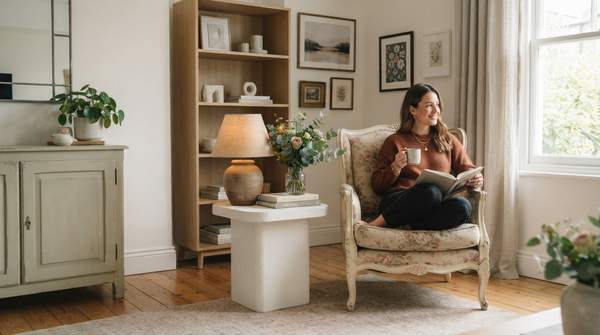
Yes, shabby chic is back—but the way to wear it in 2026 is cherry-picking, not recreating. The look that Rachel Ashwell built in the late 1980s and 1990s has returned with its signature worn woods, soft pastels, and florals, yet the current advice from designers converges on a single principle: choose one or two nostalgic pieces per room, keep the rest contemporary, and let a consistent, smoky palette hold it together. Done that way, a whitewashed farm table or a chintz cushion reads as curated charm. Done the 90s way—floral wallpaper on every wall, distressed everything—it reads as a period set.
Introduction: The Enduring Charm of Shabby Chic, Reimagined
Shabby chic emerged at the end of the 20th century as a deliberate counterpoint to the minimalism dominating 80s and 90s interiors, finding beauty in imperfection through rustic, handcrafted materials with a worn look—wood and wrought iron among them—inspired by the great houses of the English countryside. Tile and surfaces brand L'Antic Colonial, which documents the style, describes it as having since evolved from pure nostalgia for the past into something aiming at a "timeless" charm. That evolution is exactly what a modern decorator needs to understand: the style survives not because its original formula still works untouched, but because it bends.
The revival is real and current. "Shabby Chic" still ranks among the top search terms in home design, according to home-design platform Houzz, and Ashwell's own brand continues to define the aesthetic for new shoppers—her Signature Shabby Chic bedding and bath line launched exclusively at Dillard's in spring 2026. Interior designer Christine Tuttle, quoted in Good Housekeeping's guide to the trend, frames the modern take simply: a few thoughtful additions can bring the charm into a home. That word—thoughtful—is where the whole project lives or dies.
The 90s version had telltale habits that designers now caution against: whole rooms wrapped in floral wallpaper, monochromatic washes of off-white pastels, and heavily distressed furniture deployed everywhere at once. The 2020s version keeps the romance but swaps pervasiveness for restraint, depth, and contrast. The rest of this article turns that abstract instruction into a concrete method.
Modern Shabby Chic Decision Framework
Use this matrix as a shopping and styling checklist whenever you're considering a shabby chic purchase. For each element, the left column names the 90s habit that dates a room, and the right column gives the specific update that keeps it current. The reasoning behind every row is the same analytical move: identify where the original application went all-over, and modernize by limiting the dose, then rebalancing with contrast from contemporary pieces or grounding textures.
| 90s Shabby Chic Element | The Dated Application | The Modern Update |
|---|---|---|
| Distressed & whitewashed furniture | Extensive use throughout a room, creating an overly themed, matched look—especially when unbalanced by contemporary pieces or a fresh palette. | Curate one or two distressed pieces—say, that whitewashed farm table from the basement—and set them against a minimalist backdrop with clean, simple lines, high ceilings, metal accents, or large glass windows. |
| Floral & chintz patterns | Covering entire rooms in floral wallpaper or chintz fabric, a habit 2000s homeowners spent years undoing. | Use the pattern in a small dose: a powder room, a bedroom accent wall, or a single piece of furniture. Updated patterns—Trulia's roundup points to a bold blue peony design shown at a Cynthia Rowley furniture launch—feel fresh where a full suite would not. |
| Color palettes | A monochromatic scheme of soft, muted pastels and off-whites, which can read as overly sweet or bland—especially without contrasting textures or grounding elements. | Keep antiqued whites and washed-out pastels—dusty rose, sage green, soft blue—but add smoky pastels and reclaimed wood tones for depth, with matte or eggshell paint finishes rather than anything glossy. |
Two qualifications keep the framework honest. The furniture row applies only when distressed pieces are not balanced with contemporary elements or a fresh color palette—one weathered table in a clean, modern dining room is the goal, not a whole suite of matching wear. And the pattern row depends entirely on moderation: a floral earns its charm when balanced with solid textures and placed thoughtfully—a single wall, a single chair—rather than applied pervasively.
Notice the pattern in the third row, too. Tuttle specifies that shabby chic whites are off-white, often with a bit of gray in them, and that pastels should be washed-out and layered into the scheme rather than saturating it. The contemporary version of the palette isn't a rejection of pastels; it's pastels with gravity—smokier tones, wood warmth, and matte surfaces replacing the saccharine all-white wash.
Guiding Principles for a Cohesive Modern Shabby Chic Interior
Styling individual pieces is only half the job; the room has to compose. The first principle is mixing eras deliberately. Designer Phoebe Schuh, quoted in Trulia's survey of returning 90s trends, describes the "new farmhouse" as a pared-down version of 90s country kitsch, often set against a minimalist backdrop with the clean, simple contemporary country palette. That pairing—one old object in a clean setting—is what stops a vintage piece from looking stranded, and it's the same logic that makes a single distressed farm table read as intentional rather than inherited by accident.
The second principle is palette consistency. Tuttle's recipe keeps everything in one soft family: off-whites with gray undertones, matte or eggshell finishes, then layered washed-out pastels. Consistency is what makes the mix of eras feel composed rather than chaotic—when every piece shares a tonal range, a 90s floral can sit beside a modern sofa without arguing. When your nostalgic piece is a busy pattern, the surrounding scheme should stay quiet so the two don't compete.
The third principle is grounding with natural materials and texture. Warm woods, natural objects like stones, and area rugs do the anchoring. Ashwell herself moved in this direction, incorporating what she dubbed Zen interiors into her aesthetic, along with looks for "the Shabby Chic man"—a shift Houzz highlights when tracing how the style might adapt for the 21st century. A distressed chair sits far more convincingly on a wood floor with a textured rug beneath it than it does floating in a pastel void. Grounding elements also answer the chief weakness of the 90s palette: without contrasting textures, an all-pastel room drifts into blandness.
The Rachel Ashwell Perspective: Evolving the Original Aesthetic
Because Ashwell created the style, her own evolution is the clearest signal of where it can go in a modern home. Speaking with Jennifer Blaise Kramer of Mpls.St.Paul Magazine, she explained that every space she designs—whether leaning British like a Downton Abbey interior, rustic Texan, or the classic whitewashed floral—must maintain her three fundamentals: "beauty, comfort, and function." The style's surface expression bends with place and decade; those three requirements do not. That is the strongest argument that shabby chic can be updated rather than retired.
Her practical tips are refreshingly concrete. Use calming colors, since pastels always work. Layer blankets, throws, and curtains—she suggests tacking up curtains you can always change. Choose rugs instead of wall-to-wall carpeting to show off the floors. And treat lighting as very important rather than an afterthought. Each of these translates directly to the modern brief: layering and lighting are precisely the tools that add depth and warmth to pastel rooms that would otherwise flatten into sweetness. The changeable-curtain tip is especially useful for anyone experimenting with florals—it's a low-commitment way to test a pattern before committing wallpaper to a wall.
Her current collections tell the same story as her advice. The Shabby Chic by Rachel Ashwell line is built around "smokey pastels, antiqued whites, reclaimed wood, vintage inspired velvets and florals" designed to seamlessly mix and match—language that frames the aesthetic as a flexible system of compatible pieces rather than a fixed period look. Significantly, the brand presents the collection as letting you select a single item or create a complete signature room. That is the cherry-picking philosophy institutionalized: the style's own originator now sells it one piece at a time.
Creating Your Collected, Contemporary Home
Here is the decision in one sentence: integrate shabby chic elements by thoughtfully curating pieces, balancing them with modern styles, and maintaining a consistent color palette to achieve a cohesive and personal aesthetic. In practice, that means one distressed statement piece rather than a matched set, one restrained floral on an accent wall or a single chair, and one smoky-pastel scheme grounded with wood, rugs, layered textiles, and considered lighting.
How will you know it worked? The measurable indicator is a room that feels collected and personal, with updated shabby chic pieces harmoniously blended with contemporary design, avoiding a dated or overly themed appearance. Test each candidate purchase against Ashwell's own standard—beauty, comfort, and function—and against the framework's dose rule. If a piece can sit comfortably beside something clean and modern, it belongs in the room. If it demands matching companions to make sense, it belongs back in the basement.
Sources
- Transform your home into a Shabby Chic-style house — L'Antic colonial
- 21st-Century Looks for Shabby Chic Fans — Houzz
- This Nostalgic Design Trend from the ‘90s Is Making Its Comeback — Good Housekeeping
- Surprise: 1990s Design Trends Are Coming Back — Trulia
- Shabby Chic: The Official Rachel Ashwell Shabby Chic Site
- 5 Minutes with the Queen of Shabby Chic Rachel Ashwell — Mpls.St.Paul Magazine